Posted on Leave a comment

Azure DevOps inventory – export data for devops organization

Inventory is necessary for many organizations when it comes to technology tools and services. As Azure devops is a complex tool which includes many services such as Repositories, Pipelines, Test Runs and more, you may want some times to export a dump of the created assets inside your DevOps account.

Using the below powershell script, you can export

  • Agent pools
  • Agents
  • Repositories
  • Projects
  • Pipelines

https://github.com/geralexgr/azure-devops-inventory

The first version of the tool will display all the information gathered through Azure DevOps REST API on the output console. On future versions I will improve the output and also the gathered information.

You can execute the inventory script by following the instructions on Github. The only thing that you will need to provide is a PAT token inside the $organizations hashtable.

$organizations= @(
    @{name="ORG_NAME";token="TOKEN"},
    @{name="ORG2";token="TOKEN2"}
)

After the execution you will get the information in the console output.

Posted on Leave a comment

Change name for Azure devops pipeline

A common requirement when you work on your pipelines would be to name them according to your needs.

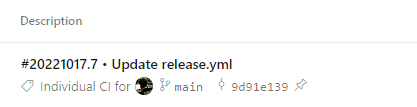
By default Azure devops name your pipeline with the buildID and the commit that initiated the build as shown below.

In order to change the name of the pipeline you can use the name keyword.

name: mypipeline

trigger:
- none

pool:
  vmImage: ubuntu-latest

steps:
- script: echo Hello, world!
  displayName: 'Run a one-line script'

Then you will have your custom name in the run of the pipeline.

Also from September 2022 and later, you can also remove the commit message from the title using appendCommitMessageToRunName

So by also adding this option

name: mypipeline
appendCommitMessageToRunName: false

trigger:
- none

pool:
  vmImage: ubuntu-latest

steps:
- script: echo Hello, world!
  displayName: 'Run a one-line script'

I will get only my preferred name on the pipeline run.

YouTube tutorial:

Posted on 1 Comment

Parameters and variables – GitHub workflows

Variables and parameters can be used on GitHub workflows in order to provide input and store temporary values that should be passed on tasks. When you need to ask for user input one should use the parameters and when that is not necessary variables is the preferred way to go.

We will now examine how we can use both in a github workflow.

You can define an input parameter using the inputs keyword. Using the code below you can run a workflow manually. The input that is requested is a string and the description is the message that will be shown to the user.

  # Allows you to run this workflow manually from the Actions tab
  workflow_dispatch:
    inputs:
      username:
        description: "give me your username"
        default: "geralexgr"
        type: "string"

Then later in the workflow you can use the value of the input using inputs.username

The below job will show the input of the user:

  job1:
    runs-on: ubuntu-latest
    steps:
      - name: task inside job1
        run: |
          echo The username is ${{ inputs.username }}

Variables on the other hand can be used during runtime. Similar to using default environment variables, you can use custom environment variables in your workflow actions. To create a custom variable, you need to define it in your workflow file using the env context.

      - name: print variable
        env:
          NAME: "Gerasimos"
        run: |
          echo Variable name is: $NAME

During workflow run the variable will be printed on the output.

Youtube tutorial:

Posted on Leave a comment

Install azure cli using Powershell – silent mode

Az cli is a very important tool that one devops engineer may need to install on systems. You can perform a silent install on a windows machine using the powershell below:

$msiFilePath = "azure-cli.msi"
Invoke-WebRequest https://aka.ms/installazurecliwindows -OutFile $msiFilePath
             
$MSIArguments = @(
    "/i"
    ('"{0}"' -f $msiFilePath)
    "/qn"
    "/norestart"
)               
Start-Process "msiexec.exe" -ArgumentList $MSIArguments -Wait -NoNewWindow
Remove-Item -Path $msiFilePath  -Force

By running the powershell the download procedure will begin.

When the installation finishes you can locate it under installed programs:

https://docs.microsoft.com/en-us/cli/azure/install-azure-cli-windows?tabs=azure-cli